
What happened?
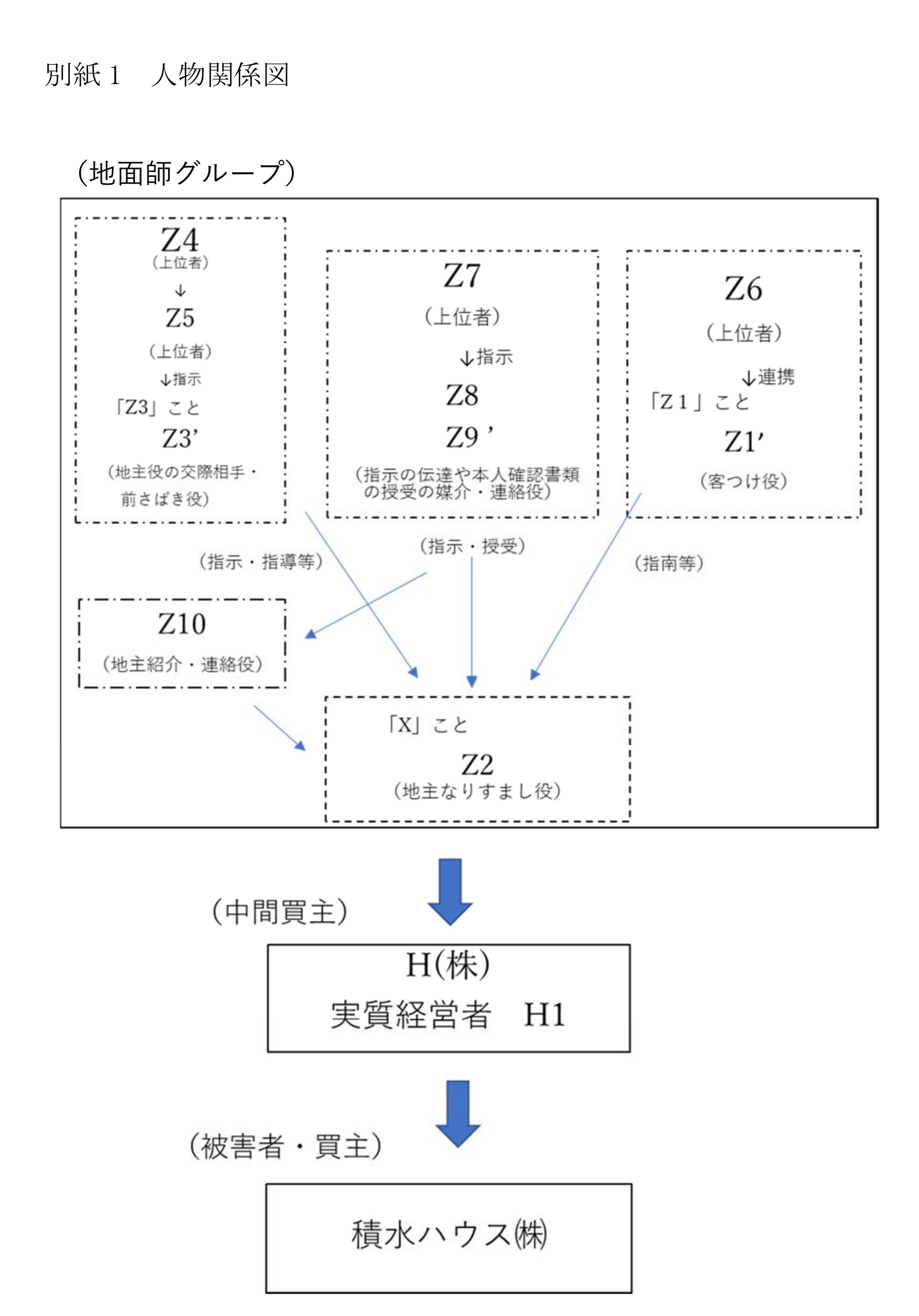
From April to June 2017, Sekisui House was deceived in a land transaction in Nishi-Gotanda, Shinagawa, Tokyo. The company mistakenly believed that a person who was not the owner and had no authority to dispose of the property was the true owner, and believed it could acquire the land from that owner through a third party.
Sekisui House paid JPY 6,308,193,309 for the property and ultimately suffered approximately JPY 5.559 billion in damage. After ten members of the land-fraud group were convicted at first instance, the company established an independent Comprehensive Evaluation Committee in September 2020. Its report was released on December 7, 2020. Sekisui House later published this official English translation on December 15. The translation itself states that it is for reference and that the Japanese original prevails in the event of any discrepancy.
The report does not reduce the incident to a single failure to identify an impostor. Between contract and settlement, a series of events arose that could have prompted further doubt about the owner’s identity or the authenticity of the transaction. The report reconstructs how those signals were interpreted and why the process moved toward settlement rather than stopping.
Background overview: Sekisui House (Wikipedia)
Eleven passages that stood out
The person posing as the owner misstated part of her own current address. Content-certified notices arrived from someone claiming to be the real owner. Within the Legal Department, the possibility that Sekisui House was being deceived was explicitly considered. Yet the warnings increasingly came to be treated as attempts to obstruct the transaction.
These eleven notes follow the sequence from early caution, through identity checks and warning notices, to an accelerated settlement, irregular events on the day before payment, a police call on settlement day, and the Committee’s later analysis of normalcy bias and organizational silos.
It began with a warning: 'be careful not to be deceived'
H1, who brought the property to Sekisui House, had known Deputy Chief Sales Manager A1 since around 2015. In March 2017, H1 sent A1 information about the Nishi-Gotanda property and offered it for purchase.
A1 had already heard a rumor that the property might be sold. But because H1 was not a real-estate expert, A1 did not think it was the kind of property H1 could ordinarily handle.
At the very beginning of the deal, A1 told H1 to “be careful not to be deceived.”
A footnote in the report, drawing on the criminal judgments, also notes that before Sekisui House became involved, other prospective purchasers had withdrawn after suspecting or recognizing that the supposed owner was an impostor.
The impostor made a mistake writing the numbers in her own current address
On April 20, Sekisui House met Fake X, the woman it believed was the true owner, for the first time. She presented documents including a passport, seal certificate, resident record and a color copy of the property’s title certificate, which a judicial scrivener examined.
A1 then asked Fake X to complete a “Confirmation Record Form (for individuals)” used to ascertain personal information. Fake X wrote her current address, which differed from the address on her resident record.
Fake X made a mistake when entering the numbers in her current address and rewrote that part.
The report specifically cautions that this form had been requested in anticipation of a possible future condominium sale and was not itself an identity-verification document for this land purchase and sale agreement.
Three content-certified notices said the sale was unauthorized and the person in the documents was not the real owner
On May 10 and 11, three written notices in X’s name arrived by content-certified mail.
They said that X had not agreed to the sale, the seal used for provisional registration was not genuine, her long hospitalization ruled out attending the April 24 contract, and the photographs in the identity documents were not of her.
The criminal judgments cited by the report found that the notices were actually sent by X’s younger brother, not by X herself. Inside Sekisui House, the Legal Department considered the possibility that the company was being deceived and instructed the Tokyo Condominium Department to verify X’s identity thoroughly.
Photo checks with old acquaintances were proposed, then rejected because they would probably upset X
After the first notice arrived, legal counsel advised Sekisui House to collect multiple forms of supporting material and suggested additional identity checks. One proposal was to show a photograph of X to longtime acquaintances or affiliated hotel associations. A building inspection was another proposed check.
On May 12, however, the Condominium Headquarters and Tokyo Condominium Department concluded that the first three notices were probably harassment letters intended to interfere with the transaction. Among the identity-check methods proposed by counsel, the photo check with acquaintances was not used.
Photo identification by old acquaintances and affiliated associations was considered difficult because it would probably upset X.
A1 instead thought the most important question was whether X possessed the keys to the building and whether the property could be inspected.
Email reproduced in the report
April 29, 2017 · Judicial Scrivener J1 to Deputy Chief Sales Manager A1 after provisional registration (official English translation excerpt)
That means the Legal Affairs Bureau determined that there was nothing missing in the submitted documents. However, that is only the result of a formal review, so if there are doubts about the seller’s identity, it will be necessary to conduct a further investigation to see if the seller can provide information and documents that only she could have.
The president was told about 'letters,' but not that they were content-certified mail; warning information also stayed split across departments
On May 12, General Manager Mitani reported to President Abe that letters had arrived from a person claiming to be the true owner. According to the report, however, he did not tell the president that the letters had been sent by content-certified mail. Mitani also explained that X’s identity had been confirmed and that the letters appeared to be harassment by competing parties.
At the same time, different warning information was circulating through other parts of the company.
The Legal Department and Condominium Headquarters shared Written Notices 1 through 4 with each other, but not with the Real Estate Department; separate concerns about H1 held by the Real Estate Department were not shared with Legal.
The Committee later treated this fragmentation as part of a broader failure of cross-departmental checks and risk sharing.
Investigation committee finding
The committee's account of the May 12 meeting's reasons for treating the notices as harassment (official English translation; omission marked)
The notices do not provide any contact information, so it is not possible to make inquiries to check the authenticity of their contents. […] If the sender of the notices was Ms. X, she would normally make a more honest assertion, but it is hard to believe that Written Notices 1 through 3 could constitute a serious action.
The team treated possession of the building keys as important, but Fake X did not appear for the inspection
A site inspection was conducted on May 19. The prior plan was for X herself to bring the building keys and open the property.
Fake X did not appear. Attorney G1 came instead with the keys, explaining that X had asked him to attend on her behalf because she had to go to the hospital. The group opened the building and Sekisui House personnel inspected the interior. Mail addressed to X was also found inside.
Although possession of the keys had been treated as an important identity check, Fake X did not attend; the inspection proceeded with keys brought by an attorney in her place.
The report states, based on the criminal judgment, that the explanation for Fake X’s absence was another misrepresentation conceived by the land-fraud group.
As warning signs accumulated, settlement was moved forward from July 31 to June 1
At an internal meeting on May 22, the series of events—including the first three notices—was viewed as interference by people unhappy with the contract. Around that time, a proposal emerged to counter the interference by moving the settlement date forward from July 31 to June 1.
Legal counsel advised that accelerating settlement could reduce the time available for other parties to take legal action, but also identified a concern: there might not be enough time to confirm X’s identity. The land-fraud side also encouraged prompt settlement, telling Sekisui House that transferring ownership sooner would make the interference go away.
Sekisui House moved the settlement date forward by roughly two months, from July 31 to June 1.
The plan was explained to President Abe immediately after his return to Japan, during a car ride on May 30. The president also called the head of the Legal Department directly to ask whether there was a problem with the acceleration.
The day before settlement: no title certificate, a forgotten birthday and a wrong zodiac sign
At the final meeting on May 31, numerous documents were checked. An ultraviolet inspection of the passport found no problem, although a judicial scrivener also noted that part of the lettering appeared slightly different from the rest.
Fake X did not bring the title certificate required for definitive registration. The registration method was therefore changed to use identity-confirmation information prepared by Attorney G1. According to the report, no one at Sekisui House other than A1 and A2, who were present, was informed that this alternative method would be used.
Fake X checked her passport after saying she had forgotten her own birthday and made a mistake with her zodiac sign, but no further questions were raised.
In its cause analysis, the Committee treated the failure to bring the title certificate as an irregular event that should have prompted heightened caution.
During settlement, an employee at the property was asked to accompany police voluntarily; JPY 4.9 billion was still paid
On June 1, while the settlement meeting was under way, a technology manager waiting at the property called to say that electricity was on inside and the back door had been nailed shut. He then called again and reported that police officers had asked him to accompany them voluntarily because a report had been made.
When A1 told the people at the settlement meeting, they concluded that this too was probably the work of people trying to sabotage the transaction, like the written notices.
After the police call, settlement continued and Sekisui House paid JPY 4,908,193,309 by eight deposit checks.
The Committee later said the people at the meeting should at least have considered confirming the situation with police instead of deciding on their own that it was an obstruction and proceeding with settlement.
After payment, two neighbors shown the photograph said the woman was not X
After settlement, Sekisui House personnel went to Osaki Police Station and met two people claiming to be the real owner’s younger brothers and an attorney. They were told that the real X was hospitalized, was not receiving visitors and had never sold the property.
That same day, employees also showed Fake X’s photograph to people near the property.
A longtime okonomiyaki-restaurant operator and the president of the neighborhood association both denied that the person in the photograph was X.
The evidence was not completely one-sided. A caretaker of a neighboring building said he had seen the woman in the photograph entering and cleaning the property, and the report notes that no one at that point seemed to strongly suspect she was an impostor. In its cause analysis, however, the Committee said the forgery could have been easily confirmed through neighborhood interviews before settlement and criticized the concern that such inquiries might offend the owner and jeopardize the transaction.
The Committee's analysis: completing the deal 'by any means necessary' became the overriding imperative
The Committee did not explain the loss only as a failure of identity verification. It described a business environment in which desirable condominium sites were difficult to secure, while this unusually attractive property had been brought to Sekisui House without competition.
The report also identified weak awareness of land-fraud risk and a vertically segmented organization in which information and expertise were not sufficiently shared across departments.
The Committee said the successful execution of the transaction “by any means necessary” became the overriding imperative, contributing to normalcy bias as irregular events were interpreted as sabotage.
The Committee’s analysis links that bias to the failure to consolidate warning information: the Legal Department, Real Estate Department and condominium business did not function as an integrated check on the transaction, while the frontline team became increasingly committed to moving forward and, in the Committee’s words, eventually became unable to turn back.
What the report says about the background
The Comprehensive Evaluation Committee did not say the incident occurred simply because the land-fraud group was sophisticated. Before the purchase agreement, Sekisui House had documents and professional checks that appeared to support the supposed owner’s identity. But the transaction also had characteristics that called for greater-than-normal caution: the property was being acquired indirectly through a third party without a reliable track record, the owner did not live at the property, and no financial institution was involved as a secured creditor.
After the agreement, the number of irregular events grew. The supposed owner had misstated part of her address. Content-certified notices challenged the transaction. Other parties raised concerns. Fake X did not attend the building inspection. The title certificate was not produced for final registration. Her birthday and zodiac answers were irregular. On settlement day, police asked an employee at the site to accompany them voluntarily.
The Committee’s concern was how those events were interpreted together. The desire to secure a rare property without competition made successful completion of the transaction an overriding imperative. The report uses the term “normalcy bias” for the process by which people continued to interpret irregular events as interference rather than as reasons to re-evaluate the transaction.
The report also points to organizational structure. Warning information was divided among the condominium business, Legal Department and Real Estate Department. Functions expected to provide company-wide checks did not combine their information into an objective risk assessment for management. From Reports therefore treats the case not as a simple hindsight question of why one clue was missed, but as a record of how repeated signals were interpreted, separated and ultimately overridden while the transaction continued.
Corrections to this article
Note 06 now specifies that Attorney G1 said X had to go to the hospital, as recorded on p.51 of the official English report. The previous wording combined this with the group’s explanation that X was unwell. Note 05 also now labels and cites the Committee’s later assessment on p.67.